


Description
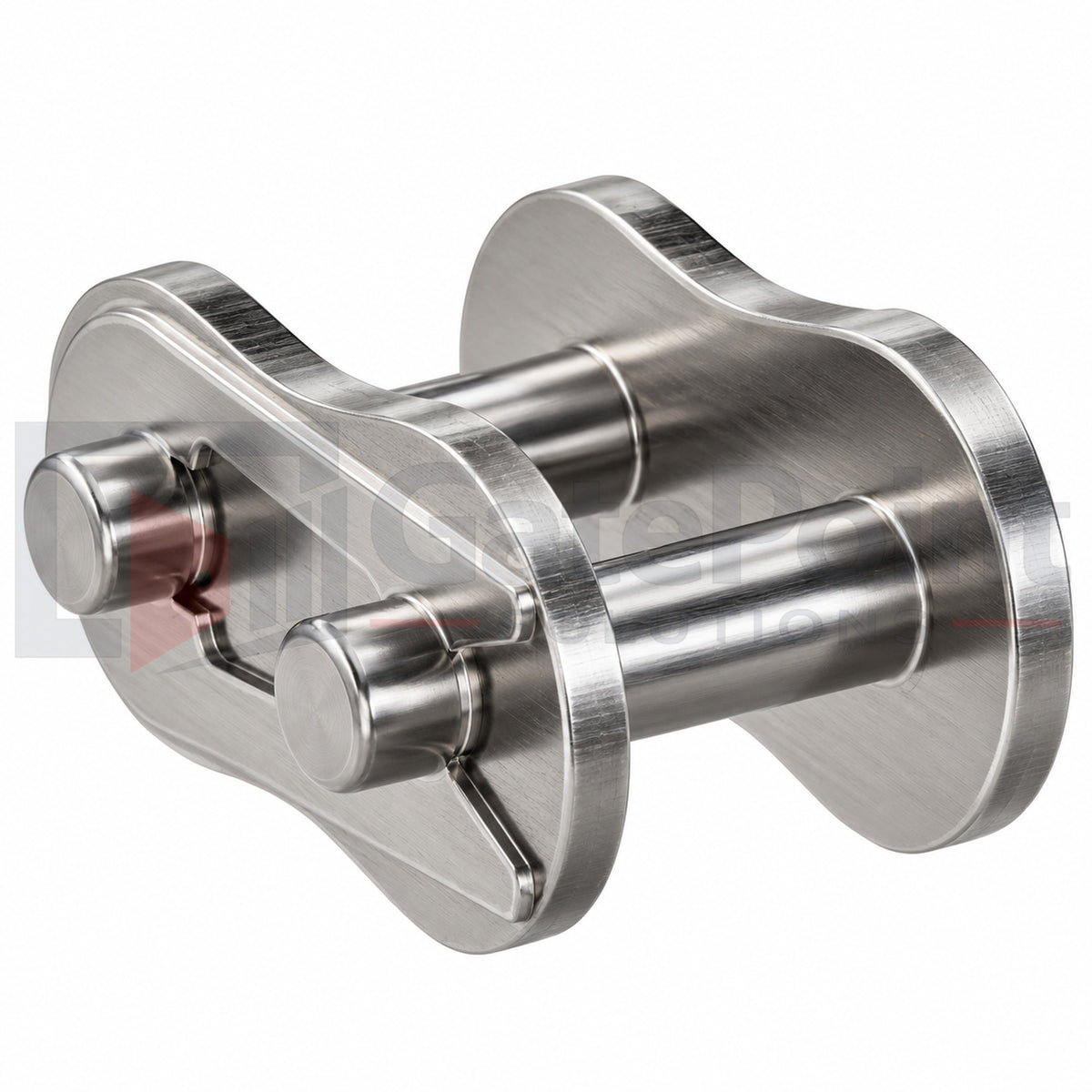
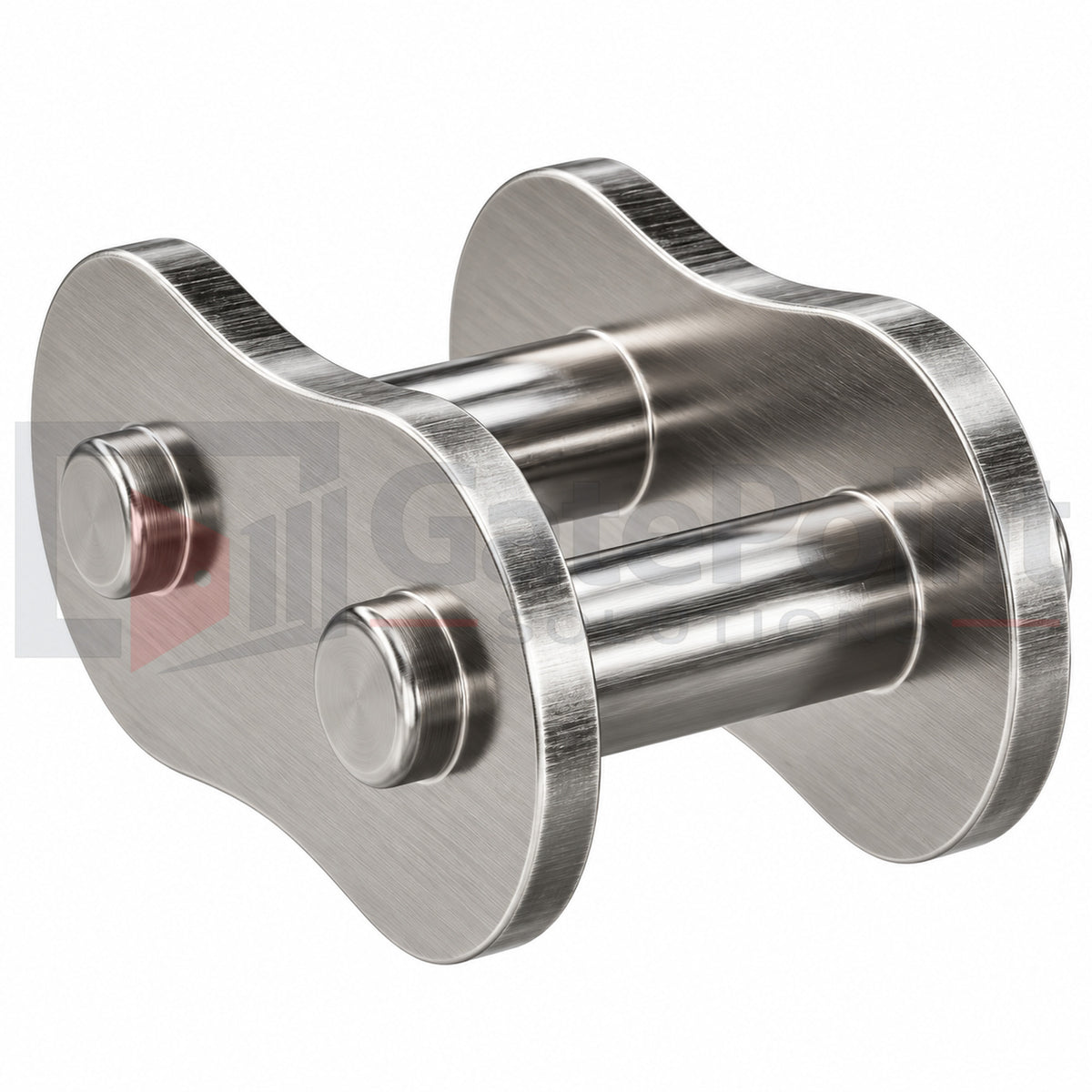
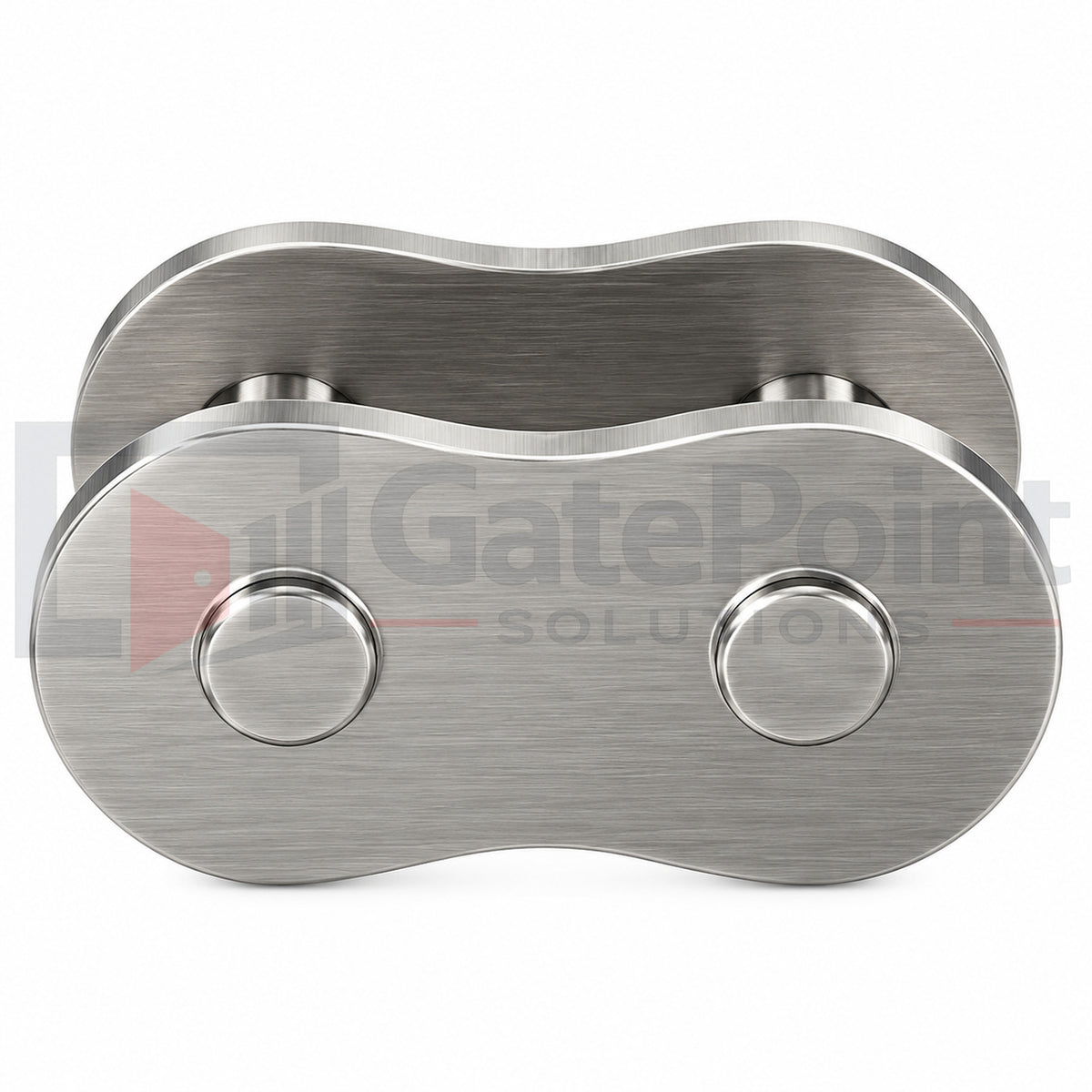
The All-O-Matic #40 Nickel-Plated Connecting Link is a replacement roller chain connecting link designed for compatible ANSI #40 chain assemblies used in automatic sliding gate operator systems. Also commonly referred to as a #40 master link, this component provides a practical solution for joining roller chain ends, completing replacement chain installations, and servicing chain-driven automatic gates.
Manufactured for ANSI #40 roller chain applications, the connecting link is designed to match the nominal 1/2-inch chain pitch of compatible #40 roller chain. It serves as a connection point between chain ends, helping create a continuous mechanical drive assembly that transfers force through the gate operator's sprocket system.
The nickel-plated finish provides additional surface protection against corrosion compared with conventional unplated steel components. This makes the connecting link particularly useful for outdoor automatic gate installations where moisture, humidity, condensation, and changing weather conditions can contribute to deterioration of exposed metal components.
A properly installed connecting link is an important part of a reliable chain-drive system. Whether completing a new installation, reconnecting chain after maintenance, or replacing a damaged master link, this All-O-Matic #40 nickel-plated connecting link provides a compatible connection solution for appropriately specified roller chain assemblies.
Designed for professional gate installers, access control technicians, and facility maintenance personnel, this replacement component is suitable for residential, commercial, and light-industrial sliding gate applications where the operator requires ANSI #40 roller chain.
Key Features & Benefits
-
All-O-Matic Replacement Component: Connecting link for compatible automatic gate operator chain-drive systems.
-
ANSI #40 Chain Compatibility: Designed for properly matched #40 roller chain assemblies.
-
Nickel-Plated Finish: Provides additional surface corrosion protection for exposed metal components.
-
1/2-Inch Nominal Chain Pitch: Matches the standardized pitch of ANSI #40 roller chain.
-
Master Link Functionality: Connects compatible roller chain ends to complete the chain assembly.
-
Sliding Gate Operator Applications: Suitable for properly specified chain-driven automatic gate systems.
-
Chain Repair & Maintenance: Useful when replacing worn, damaged, or missing connecting links.
-
New Chain Installation: Helps complete replacement roller chain installations.
-
Outdoor Gate Applications: Nickel plating provides an additional protective surface layer in moisture-prone environments.
-
Professional Service Component: Convenient for gate installation contractors and maintenance technicians.
-
Replacement Chain Hardware: Helps restore a properly assembled chain-drive system.
-
Residential & Commercial Applications: Suitable wherever the specified roller chain and connecting link requirements match.
-
Compact Replacement Part: Practical to keep in service vehicles and maintenance inventories.
-
Compatible Chain Assembly Maintenance: Supports properly matched ANSI #40 chain-drive installations.
Technical Specifications
|
Specification |
Details |
|---|---|
|
Manufacturer |
All-O-Matic |
|
Product Type |
Roller Chain Connecting Link |
|
Alternate Name |
Master Link |
|
Chain Size |
ANSI #40 |
|
Finish |
Nickel Plated |
|
Nominal Chain Pitch |
1/2 in. (12.7 mm) |
|
Compatible Chain Type |
Appropriately Matched #40 Roller Chain |
|
Primary Function |
Joining Roller Chain Ends |
|
Primary Application |
Sliding Gate Operator Chain-Drive Systems |
|
Chain Roller Diameter (Nominal) |
0.312 in. (7.92 mm) |
|
Chain Inner Width (Nominal) |
0.312 in. (7.92 mm) |
|
Installation |
Mechanical Chain Connection |
|
Corrosion Protection |
Nickel-Plated Surface Finish |
|
Product Category |
Gate Operator Chain & Drive Hardware |
Note: The dimensions listed are nominal ANSI #40 roller chain dimensions, not independently verified measurements of the connecting link itself. Verify the link configuration, retaining hardware, and compatibility before installation.
Applications
The All-O-Matic #40 Nickel-Plated Connecting Link is designed for compatible roller chain installations requiring a #40 master link.
Common applications include:
-
Residential Sliding Gate Operators: Connecting #40 roller chain assemblies used in compatible automated driveway gates.
-
Commercial Sliding Gate Systems: Servicing chain-driven gates at offices, retail properties, commercial facilities, and business entrances.
-
Light-Industrial Gate Installations: Maintaining compatible sliding gate systems at warehouses and storage facilities.
-
Nickel-Plated Chain Installations: Completing new or replacement #40 nickel-plated roller chain assemblies.
-
Chain Repair Projects: Reconnecting compatible roller chain after a damaged connecting link has been removed.
-
Preventative Maintenance: Replacing deteriorated or worn master links during scheduled gate operator servicing.
-
Chain Length Adjustments: Joining properly prepared chain ends after chain length has been adjusted.
-
Gate Operator Service Inventory: Maintaining spare connecting links for field repairs.
-
Replacement Chain Assemblies: Completing compatible #40 roller chain installations on automated sliding gates.
Compatibility & Installation Information
The All-O-Matic #40 Nickel-Plated Connecting Link is intended for compatible ANSI #40 roller chain assemblies.
It may be used with All-O-Matic or other manufacturers' chain-driven gate systems when the installed roller chain requires a compatible #40 connecting link.
Before installation, verify the following:
-
Correct Chain Size: Confirm the existing roller chain is ANSI #40.
-
Chain Pitch: Verify the chain uses the standard 1/2-inch pitch.
-
Chain Construction: Confirm the connecting link matches the specific chain configuration and manufacturer requirements.
-
Connecting Link Design: Check that the replacement link's plate, pin, and retention arrangement is appropriate for the chain.
-
Chain Condition: Inspect the existing chain for excessive wear, corrosion, damaged rollers, or elongated links.
-
Proper Assembly: Follow the applicable manufacturer's instructions for installing and securing the connecting link.
-
Sprocket Alignment: Ensure the completed chain assembly tracks correctly through the operator's sprockets.
-
Chain Tension: Adjust chain tension according to the gate operator manufacturer's specifications.
Important: ANSI #40 and ANSI #41 roller chains both have a nominal 1/2-inch pitch, but their roller dimensions and inner widths differ. Their connecting links should not be treated as interchangeable without confirmation.
ANSI #50 roller chain uses a nominal 5/8-inch pitch and requires a compatible #50 connecting link.
Do not substitute a connecting link solely because it appears visually similar to the original component.
Disconnect power and secure the gate against unintended movement before servicing the chain-drive system. Inspect and verify the completed connection before returning the operator to service.
What Is a Roller Chain Connecting Link?
A roller chain connecting link, commonly called a master link, is a specialized component used to connect the ends of a compatible roller chain assembly.
Roller chain consists of interconnected links that articulate around sprockets to transmit mechanical force. A connecting link allows the prepared chain ends to be joined without permanently riveting every connection during installation.
In automatic sliding gate applications, a correctly assembled roller chain system helps transfer mechanical force from the gate operator's drive sprocket to the gate.
Why Connecting Links Are Important
-
Complete Chain Assembly: Join compatible chain ends during installation.
-
Simplify Chain Replacement: Allow technicians to assemble properly prepared replacement chain lengths.
-
Support Maintenance: Provide a serviceable connection point where the chain design permits.
-
Maintain Chain Continuity: Help create the continuous chain assembly required for the operator's drive arrangement.
-
Support Proper Sprocket Engagement: Correctly matched links allow the chain to articulate through compatible sprockets.
-
Facilitate Repairs: Provide a replacement option when an existing connecting link becomes damaged or unsuitable for reuse.
A connecting link must be properly sized, assembled, and secured. Incorrect installation can cause chain separation, mechanical damage, or unsafe gate movement.
Benefits of Nickel-Plated Connecting Links
Nickel plating is a protective metallic finish applied to steel components to improve resistance to environmental corrosion.
For automatic gate applications, nickel-plated connecting links offer advantages over conventional unplated steel components in certain outdoor environments.
Enhanced Corrosion Protection
Nickel plating helps protect the underlying metal from moisture exposure and oxidation. This can be particularly beneficial for automatic sliding gates installed in humid climates or locations exposed to frequent rainfall.
Suitable for Nickel-Plated Chain Assemblies
The All-O-Matic #40 nickel-plated connecting link is a natural replacement choice for compatible #40 nickel-plated roller chain installations where the same finish is desired.
Practical Outdoor Maintenance Component
Nickel-plated connecting links provide an additional protective surface layer for chain-drive assemblies that operate outdoors.
Professional Replacement Solution
The component allows installers and technicians to maintain compatible roller chain assemblies without replacing an otherwise serviceable chain solely because the connecting link requires replacement.
Note: Nickel plating improves corrosion resistance but does not make a connecting link completely rust-proof. Proper maintenance remains important.
Nickel-Plated vs. Standard Black vs. Dacromet vs. Stainless Steel Connecting Links
Selecting the appropriate connecting link material and finish helps maintain compatibility with the installed roller chain and its operating environment.
|
Connecting Link Type |
Primary Characteristic |
Common Application |
|---|---|---|
|
Standard Black Steel |
Conventional steel construction |
General-purpose chain-drive installations |
|
Nickel-Plated Steel |
Added surface corrosion protection |
Outdoor installations with moisture exposure |
|
Dacromet-Coated Steel |
Protective corrosion-resistant coating |
Exposed gate installations |
|
Stainless Steel |
Corrosion resistance through base material |
Humid, coastal, and corrosion-prone environments |
Standard Black Connecting Links
Standard black steel connecting links are commonly used with conventional steel roller chain where specialized corrosion-resistant finishes are not required.
Nickel-Plated Connecting Links
Nickel-plated connecting links provide additional surface corrosion protection and are useful for compatible nickel-plated chain assemblies.
Dacromet-Coated Connecting Links
Dacromet-coated connecting links use a protective zinc-aluminum coating designed to improve corrosion resistance in demanding environments.
Stainless Steel Connecting Links
Stainless steel connecting links offer corrosion resistance through the base material rather than relying solely on a surface coating.
Important: Finish alone does not establish compatibility or load capacity. Confirm the connecting link's dimensions, design, and mechanical requirements before installation.
Connecting Links vs. Offset Links
Connecting links and offset links serve different purposes in roller chain installations.
|
Feature |
Connecting Link |
Offset Link |
|---|---|---|
|
Common Name |
Master Link |
Half Link |
|
Primary Function |
Joins compatible chain ends |
Changes chain length by one pitch |
|
Typical Application |
Completing a roller chain assembly |
Certain chain length adjustments |
|
Chain Size Requirement |
Must match installed chain |
Must match installed chain |
|
Installation |
Requires proper retention and assembly |
Requires proper assembly |
|
Interchangeable |
No |
No |
Connecting Links
A connecting link joins compatible roller chain ends to complete the chain assembly. It is commonly used during new chain installations, chain replacement, and maintenance.
Offset Links
An offset link, sometimes called a half link, is used in certain roller chain applications where an odd number of pitches is required.
Offset links may have different mechanical strength characteristics than standard chain links and should only be used where approved for the application.
The All-O-Matic #40 Nickel-Plated Connecting Link is a connecting link, not an offset link.
Understanding ANSI #40 Roller Chain Compatibility
ANSI #40 roller chain uses standardized dimensions that help identify properly matched chain-drive components.
The nominal pitch is 1/2 inch (12.7 mm), measured from the center of one chain pin to the center of the next.
Other relevant characteristics include roller diameter, inner width, pin dimensions, and link plate construction.
When selecting a connecting link, technicians should verify that the replacement matches the installed chain rather than relying on pitch alone.
Different chain constructions or specialty chain products may require manufacturer-specific connecting links even when the nominal ANSI size is the same.
Connecting Link Inspection & Maintenance
Connecting links should be inspected as part of routine gate operator maintenance.
Common Signs of Connecting Link Wear
-
Corrosion: Rust or deterioration affecting the connecting link's components.
-
Damaged Link Plates: Cracks, deformation, or visible mechanical damage.
-
Worn Pins: Excessive wear at the pin and bushing contact areas.
-
Loose Retaining Hardware: Missing, damaged, or improperly secured retention components.
-
Stiff Movement: Binding that prevents the link from articulating properly.
-
Improper Fit: Excessive looseness or resistance when installed in the chain.
-
Chain Misalignment: Irregular tracking through the sprocket assembly.
Recommended Maintenance Practices
Inspect the connecting link and surrounding chain regularly, particularly on high-cycle gate operators or installations exposed to moisture and contaminants.
Replace damaged or excessively worn connecting links with properly specified components. Do not reuse retaining hardware when prohibited by the component manufacturer's instructions.
Lubricate and maintain the chain assembly according to the operator and chain manufacturer's recommendations.
Why Choose All-O-Matic Gate Operator Components?
All-O-Matic manufactures automatic gate operators and related accessories for residential, commercial, and industrial access control applications. Its product offerings include sliding gate operators, swing gate operators, control systems, and replacement chain-drive components.
Maintaining the correct roller chain and connecting link configuration is essential for reliable mechanical operation.
The All-O-Matic #40 Nickel-Plated Connecting Link provides installers and service technicians with a replacement component for compatible ANSI #40 roller chain assemblies.
With its nickel-plated finish, standardized chain size, and practical master link function, this connecting link is a useful replacement part for gate operator installation, repair, and preventative maintenance projects.